 |
Mission Implausible Examining Daniel Zilka's revisionist history, part 3 by Randy Garbin |
|||||||||||||||||
|
|
||||||||||||||||||
|
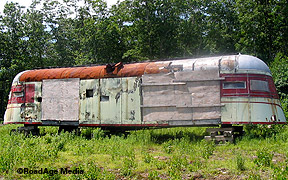
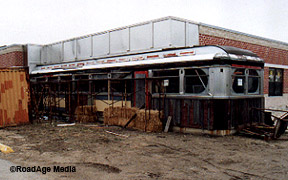
Missing Diners We note that several diners did not make it onto Zilka’s inventory list back in 2003. In some instances, the ADM had not yet flipped these. There are also more than 40 other diners not listed from at least a dozen states that Zilka has attempted to acquire "for the museum". These include the Dinner Bell (aka Finely Fran's) Sterling #363, Worcester #705, the former Lackawanna Trail, a 1920's Tierney, Worcester #774, Midway Diner, Pee Dee, SC, the Williams Town and Tinker Tavern diners… the list just goes on ad nauseum. Finally, there are the ADM's lost diners. The true stories of what became of several diners while in Zilka’s care is not something he would want the public to know. Let's look at a sampling from that list... Tasley Diner, 1930’s Brill Round Diner, c1939 Paramount Valley Diner, 1950 Mountain View #284 Homestead Diner (aka Canoga, Louella’s) 1938 Sterling #385
My Tin Man, Sterling streamliner 1940 # 4012 Barr’s Diner 1938 Sterling #3815
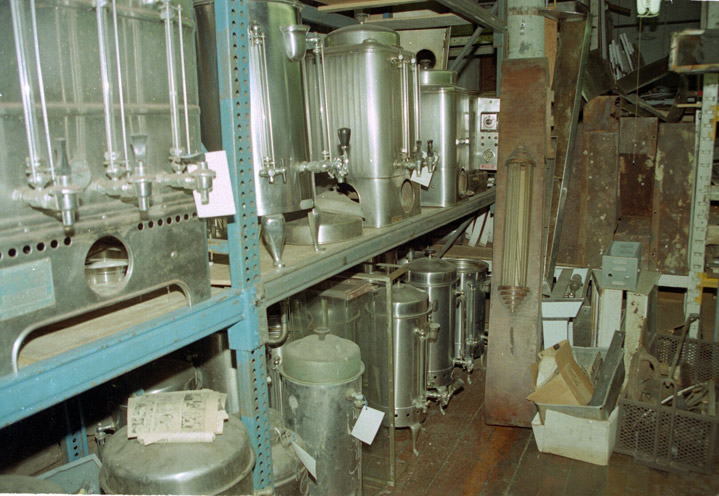
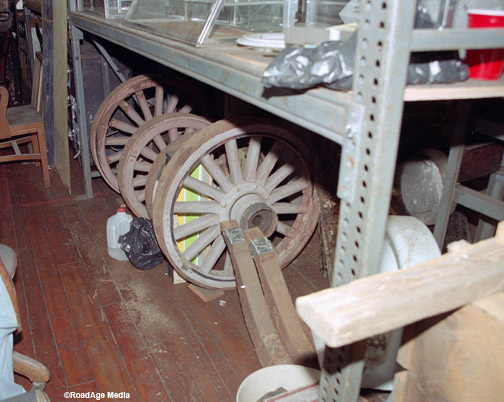
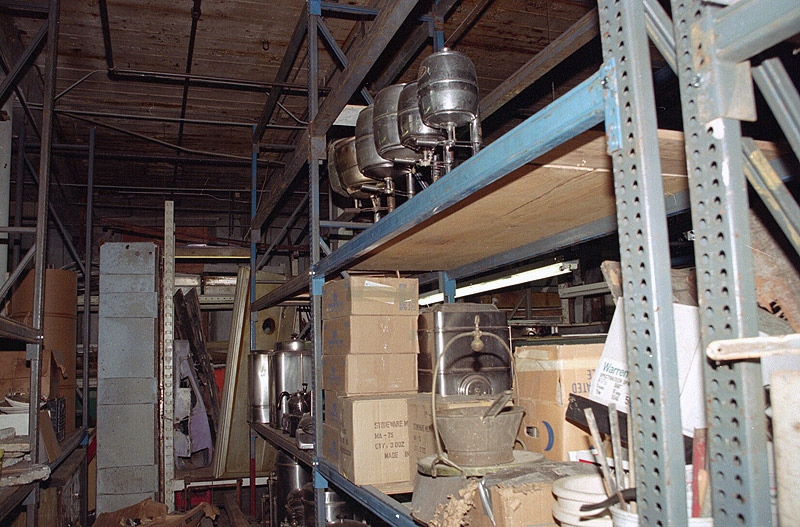
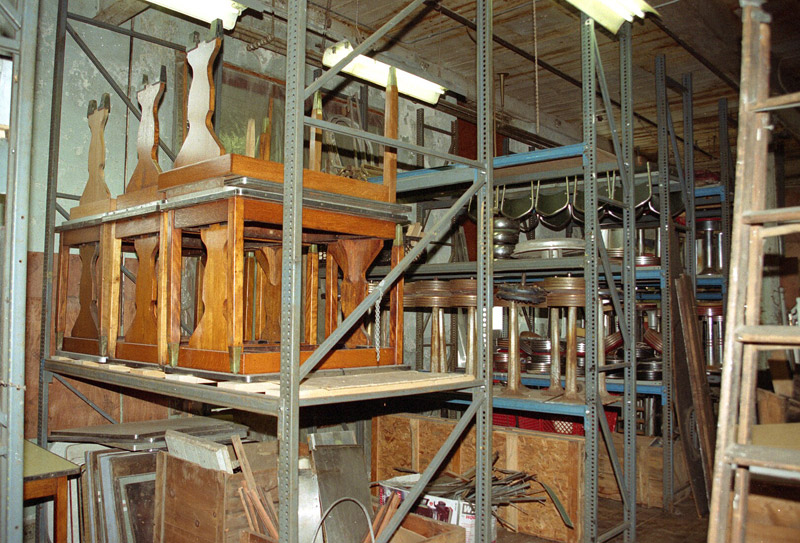
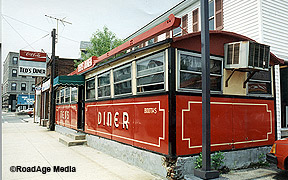
On April 26, 2002 the Milford Daily News reported on the demise of the diner. Reporter Denise Marie Miz wrote; "The demolition of the structure came as representatives of a Rhode Island diner museum were on their way to Milford to possibly lay claim to the structure for preservation. American Diner Museum president Daniel Zilka was on his way to Milford yesterday morning to view the diner when he learned it had been demolished. . . " Following the loss of Ted's, much was written in the local papers about the inaction of the ADM and Mr. Zilka. A PR battle ensued with reports stating town officials had found diner Museum officials to be uncommunicative. Indeed, while Zilka seems to have cornered the market on 1930s vintage Worcester cars that will likely never serve another cup of coffee, the diners built after 1964 now teeter on the brink of oblivion. Saving the prime examples of this era will require considerable resources that few museums possess, even if they did care about a pristine Kullman Colonial. Who will come to their rescue in the next decade? During the last year, we have been actively engaged in planning the physical layout of the museum through community design workshops, engagement of a professional museum designer and participation in workshops and seminars. Since 1996, the American Diner Museum has been an active partner in the Heritage Harbor Museum collaboration in Providence. Actually, this planning started in 1996 with occasional meetings and workshops with "experts" as described above. While the ADM might have its floor plan established, the chances of it going into Heritage Harbor, or anywhere else for that matter, look increasingly slim. We are currently renovating a 2,000-square-foot space in Lincoln, Rhode Island, to serve as the temporary office, library and exhibit space for the museum. Our new location, 14 minutes from downtown Providence, will be open to members and the general public by appointment. “By appointment” because this is where Zilka lives. Notice that neither the website or its last newsletter happens to list an actual address. Also noteworthy is that there is no date provided as to when visits “by appointment” will commence. The collections will be available for research purposes, with a user's fee for nonmembers. In reality, neither members or nonmembers have had access to the collection. Fee or no fee. Authors and other interested parties have tried to visit the archives and been denied. With regard to the museum’s warehouse of stored diner parts, the level of access and cooperation is the same. In 2000, diner restorer and operator Gordon Tindall asked if he could borrow several sample items for his vintage Tierney diner restoration project. The museum had samples of the very same items he needed, and although it had no immediate use for them, Zilka denied Tindall’s request. All of which begs the question; Why store salvaged diner parts if they are never to be made available to the public? Depending on our resources and volunteer help, it is our hope to be up and running in 2003. Well, it's 2005. Where's the museum -- temporary or otherwise? A recent Waterbury Republican-American article, quotes Zilka saying that the museum will open later this year! Of course, the writer of the story didn't challenge this baseless claim. Zilka's purposely vague statement allows for the ultimate "out." Resources and volunteers are indeed much needed to make this all happen. The challenge of retaining people is paramount to the success of any non-profit volunteer organization. Volunteers need to know that the organization values their efforts and puts them to productive use for the good for the cause. However, after nearly 9 years of incorporation, and 15 years in the making, the diner museum should have by now acquired a great deal of experience in this regard. It has not. The only volunteer left appears to be Gregg Anderson, though it is important to note here that Anderson resigned his seat on the Board in 2004 not five days after this reporter personally warned him of his liability for Zilka's actions. His name is no longer listed on the ADM's annual report filing with the Rhode Island Secretary of State's office. We'll let that action speak for itself. Quentin Sanford has received a similar warning. The continued support of our members is appreciated as we grow and develop into an accredited museum. Advice and criticism from our members is important and always welcome. Please send us your ideas and visions of the American Diner Museum and watch "your dues at work."
In this last paragraph, Zilka refers to the importance of “our members” -- twice. He claims to welcome “advice and criticism from our members...” To the uninformed, that may seem reasonable, but it must be pointed out that while Zilka readily cashes the checks of new members taken in by the publicity and the impressive website, he makes no attempt to engage or inform them of his organization's activities. He also does not solicit renewals. So if new members only receive canceled checks and a two-year-old newsletter for their $35, how welcome is their comments or criticisms? In these situations, most people simply drift away, which all works out fine for the Executive Director. For some inexplicable reason, the IRS and Rhode Island Secretary of State continue to permit the ADM to exist on paper despite the continued violation of its own bylaws and those laws governing non-profit corporations. I have to view Zilka’s Mission Statement as one of the most cynical, contrived, insincere, and deceitful documents I have ever read. Every declaration is a loaded public relations ploy. Every sentence contains some cleverly worded qualification. It would appear Zilka’s true intention is to operate a private diner salvage and restoration business. For all intents and purposes, he is doing just that and has simply sugar coated this with promises of some day starting a museum. Which brings me to these final observations regarding accountability. Have our rules and the laws that govern us become so paralyzed that a person or organization can carry on such an operation for a decade, while handing out tax deductible receipts at will, and no one at any level of government or law enforcement is prepared to review these activities? It is no wonder Zilka continues to pursue this. Apparently, no one is minding the store. Pulp Fiction: The Media spreads the myth In “Valley of Deception”, the previous chapter of this investigative series, we raised the very serious question of what role the media has played in its spotty and all-too-often sub-par reporting on the activities of the ADM. To journalists, reporting on diners is considered “soft news” with such assignments going to junior reporters. Even when experienced journalists write about diner-related stories, they often view it as nostalgia, or as “feel good” news and fail to see the business realities. As such, the level of facts checking, editorial supervision and accountability in countless articles thus far published does not appear to have been a priority. There are exceptions of course, but historically, far too many reports about the diner museum have not been scrutinized to the same degree editors might otherwise. I’ll readily acknowledge that to an outsider, a visit to Zilka's museum web site may appear impressive. On the surface, a cursory glance may confirm to the reader that such a museum institution must exist – somewhere. However, it’s important to note that Zilka's partner is an experienced professional web site designer and has indeed created a very convincing online charade for public consumption. Today’s journalists rely extensively on the wire service for stories, and therefore write many things without bothering to seek confirmation. And worse, other journalists then read these reports and repeat what has gone before. Even the New York Times fell for Zilka's ruse. Thus in the eyes of the public, reading similar stories over and over naturally suggests what is published must be true. Worse, every mention of this fictitious institution suggests to some individual somewhere that perhaps Zilka might indeed provide a safe repository of their deceased husband's original diner blueprints, or father's collection of memorabilia, or the shuttered but intact Sterling Streamliner they need to clear from the site. Will Zilka ever provide for the proper venue to tell this rich and colorful story to the public? Can we ever expect him to add anything coherent to this uniquely American historic narrative? In the fifteen years that he has worked to amass this admittedly remarkable collection, Daniel Zilka has published very little outside of his own "museum's" newsletter" and two "Ask the Dinerman" columns published in Roadside Magazine. He has indeed taken a great deal from this unique heritage. When can we expect him to start giving something back? We must then conclude that the American Diner Museum exists either as an unrealized dream in the mind of its so-called founding "Executive Director" or a well-executed and continuing scam of a clever social misfit. We'll leave the final verdict to the IRS, to history, and the collective conscience of the broader preservation community.
|
|||||||||||||||||
All contents copyright ©2001-2008 Coffee Cup Media LLC, Jenkintown, Pennsylvania |
||||||||||||||||||
|
|