 |
Mission Implausible
Examining Daniel Zilka's revisionist history by Randy Garbin |
|||||||||||
|
|
March 7, 2005 |
|||||||||||
|
In the Diner Museum's last (and perhaps final?) newsletter in the winter of 2003, it published a lengthy mission statement attributed to Daniel Zilka updating the membership on the organization's progress. This declaration titled “Museum’s Mission Remains Steady” came out soon after our third report on Zilka's activities and of his museum's faltering progress. At the time we regarded his essay as a de facto response to our criticisms. The article, also posted on the Museum's website, painted quite a rosy picture for the museum and its future. Well, two more years have passed and we believe it’s time to assess the veracity of Zilka's optimism. The following is both an update and catalog of the ADM’s history of neglect and inactivity in which we use Zilka's own words as our outline and hold them up to close scrutiny. In this article, Zilka writes: I arrived in Providence during fall 1995 with the mission of establishing a museum dedicated to the history of the American diner. I had explored the possibilities of setting up a diner museum in New Jersey or Worcester, Mass., but received little support or enthusiasm.
Actually, records indicate Zilka moved to Providence in the fall of 1993, not 1995 as stated. Commencing in 1990, Zilka began representing himself as the Director of something he called the “American Diner Project”. (ADP) One of the proclaimed objectives of ADP was the creation of the “American Diner Museum”. (ADM) Still years from incorporating the ADM, the ADP was not, at that time, promoting any specific site for its future museum. Initially, Zilka approached the Worcester Historical Museum and the Johnson & Wales Culinary Archives. According to people at J&W, Zilka's idea for a museum involved their payment to him of a salary of $40,000 per year and an office in their facility. In return, he would provide copies of his collected ephemera. Apparently Zilka's presentation fell flat. Today these organizations regard Zilka as persona non grata. Finally, several discussions with Al Klyberg, then-director of the Rhode Island Historical Society (RIHS), produced an offer of office space and support services, though no financial assistance. Failing to attract any interest in Worcester, Zilka’s arrival in Providence in 1993 coincided with the major urban revival then taking place there. His timing hit the mark perfectly. Al Klyberg had just begun drafting his plan to establish a museum of museums in a project that would later be called Heritage Harbor -- a project recently dubbed by the Providence Journal as a "failure". Klyberg saw the diner museum as a feel good fit into the concept. After all, everyone likes to eat and this idea provided a built-in food concession. Mr. Klyberg's acceptance and effective sponsorship raised Zilka's profile and seemed to give his efforts the appearance of legitimacy he sought. It certainly impressed this reporter at the time. Between 1993 -1995 Zilka continued to roam the northeast peddling the idea of the museum. On the handouts he distributed, the ADM concept was described as "an organized effort by interested individuals to promote the historic research, academic study, and the preservation of the American diner." Until that time, Zilka had yet to publish a single article on the subject, despite his Masters degree in preservation. Our first collaborative endeavor was an exhibit at the RIHS, titled "Sandwiches, Pies and Coffee: The Beginnings of the American Diner." We acquired many artifacts from treasure hunts, flea markets, antique shops and donations. More like borrowed heavily from the extensive archives of Richard J.S. Gutman. In fact, most of the items on display came from Gutman's collection, which Zilka took months to return. Today, Mr. Gutman curates an exhibit on diner history at the Johnson & Wales Culinary Archives and will have nothing to do with Zilka or his “museum.” The Museum idea received overwhelming support and assistance from preservationists, educators, nationally recognized authorities on diner history, publishers of popular culture magazines and many interested individuals. Indeed, for a time Roadside Magazine became one of the diner Museum's biggest promoters. We granted Zilka access to our mailing list and provided him with a great deal of free publicity. In that sense, we unknowingly played a part in legitmizing the ADM in the public's mind. Today, most of that support he writes of has evaporated, especially support from preservationists. Zilka is a pariah among his peers, especially those described as authorities on diner history. He has yet to publish a book on diners and was recently dropped as a columnist by a national magazine for poor communication and failing to deliver articles. Historians don't help their credibility by continually missing deadlines and failing to publish. The challenge was how to create a museum from the ground up without secure funding or a collection of important artifacts to exhibit. In 1996, the extent of the collection was a few old photographs of diners, dozens of photos from numerous road trips, some postcards, matchbook covers, menus and a VHS tape of the movie "Diner." This portrayal of the collection belies the truth. If the museum only had this paltry collection in 1996, how could it mount an exhibit in 1995? Though this investigation has already explained the source of most of the displayed artifacts, this statement points to discrepancies and inherent disingenuity in Zilka's account. He fails to credit Mr. Gutman for his extensive help, and then describes a collection that would fit in a couple of shoe boxes. Which is it? True, the ADM faced a considerable challenge creating such an institution from the ground up without funding. All of which does not explain how expanding on a collection of rotting diners attracts that critical funding. In truth, by 1996 Zilka had already been collecting donated artifacts for five years going back to 1991. But as time marches on, instead of promoting the fact that he’s been hoarding assets for the past fifteen years, Zilka prefers to quote the shorter nine year figure. After all, 9 years of cataloging inaction, sounds better than 15. The American Diner Museum began as, and remains, a volunteer organization managed by a group of dedicated individuals who are interested in diners, historic preservation, popular culture and the culinary arts. A board of directors establishes goals, provides guidance and is responsible for the disbursement of our limited financial resources. Actually, a Board of Directors also oversees the actions and grants consent to the Executive Director, especially in cases where he seeks to commit the Museum in any material fashion. The bylaws are quite clear on this point. The Executive Director, for instance, can't take legal action without consent of the Board. In the past five years, most members of this Board have resigned in disappointment or outright disgust, mainly over their inability to restrain Zilka's rogue actions and penchant for collecting artifacts without proper authority or regard for their future security. Today, the only other members of this Board besides Zilka are Quentin Sanford and Bethany Smith. Our sources of revenue at this time are limited to fund-raising events, small grants, the sale of donated diners, gift shop sales and membership dues. Real museums raise money through donations, grants, and corporate sponsorships. In 1999, then-treasurer Robb Kok announced at Diner-Rama his intention to establish a million dollar endowment. Mr. Kok was certainly thinking big at the time, given that the ADM had a mere $2,000 in the bank, but he deserves credit for seeing the big picture. The Heritage Harbor project would require the ADM to pay half that just to cover the cost of the space it would occupy.
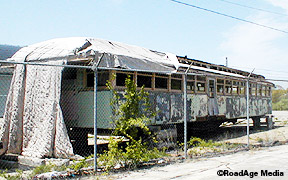
In The Diner, the ADM’s newsletter, Issue No. 8, Dec. 2000, the front page leads with the headline "Louis' Diner An 'Irreplaceable Treasure'". The article's sub-title reads: "Save America's Treasures - Official Project". We thought that the National Trust might be interested in seeing some pictures of it now, as it sits rotting in a barren industrial wasteland, so we forwarded them last year. How ironic that what was designated an "American Treasure" with great fanfare just a few years ago, now sits uncovered with water running through it. It took me awhile to realize Zilka had no actual intention of running a museum or restoring these diners he was collecting. I came to accept that his main objective was to collect valuable historic artifacts by way of donation from an unsuspecting public and then either keep these items for himself or sell these to finance the purchase of other artifacts. For a so-called museum, it is noteworthy that after 9 years since incorporation, there exists no catalog of assets for the ADM. Zilka still has no documentable record of what the museum owns. Ultimately, the hoax is on the IRS and all taxpayers. I stayed on the Board for some time before concluding that I had to disassociate myself and resign, as others had before and since my departure. As late as 1999, Zilka claimed that the RIHS would provide grant-writing assistance as part of their agreement. At the time, I urged this to go forward mainly to fund the establishment of a salaried, full-time Director who would then be responsible for making further contact with corporate donors. With a salary, this Director would not have to split time between a "real job" and the duties performed for the museum. For some reason, at the time, Zilka never expressed to this reporter much enthusiasm for the idea. Expenses for the museum include rent for collection storage, the quarterly "The Diner" newsletter, acquisition and collections, office expenses, liability insurance and DinerRama conventions. Members haven't seen a new "quarterly" newsletter since early 2003. Office expenses must be pretty minimal given that the Museum now resides in Zilka's home, and the “annual” DinerRama, which was to have been the museum’s major fund raising event faltered after only 5 years and hasn’t been held since 2002, with its last event attracting fewer than 40 people. Since the publication of that newsletter, the ADM's biggest expenses have been storage rental and attorney's fees incurred for its attempt to intimidate RoadsideOnline for this investigation. Despite the lack of a permanent facility and paid employees, we have undertaken many projects and endeavors. We have developed a proactive acquisition and collection program. No doubt the “collection program” is active. The 2003 Annual Report, the last year such a report was produced, quotes $8,626.35 in acquisitions. But it’s anyone’s guess just what was acquired in 2003, or in any other year, seeing as Zilka has made the collection inaccessible to the public and successfully avoided cataloging. What we do know is that all of the volunteers who had signed up for this effort over the years -- except Gregg Anderson -- have now left the museum due to Zilka's lack of cooperation. The effort simply cannot proceed without him, since he acquired almost every item in the collection and remains the only person who knows what assets are in the collection.
|
|||||||||||
All contents copyright ©2001-2008 Coffee Cup Media LLC, Jenkintown, Pennsylvania |
||||||||||||
|
|